The Oldest Wooden Schoolhouse
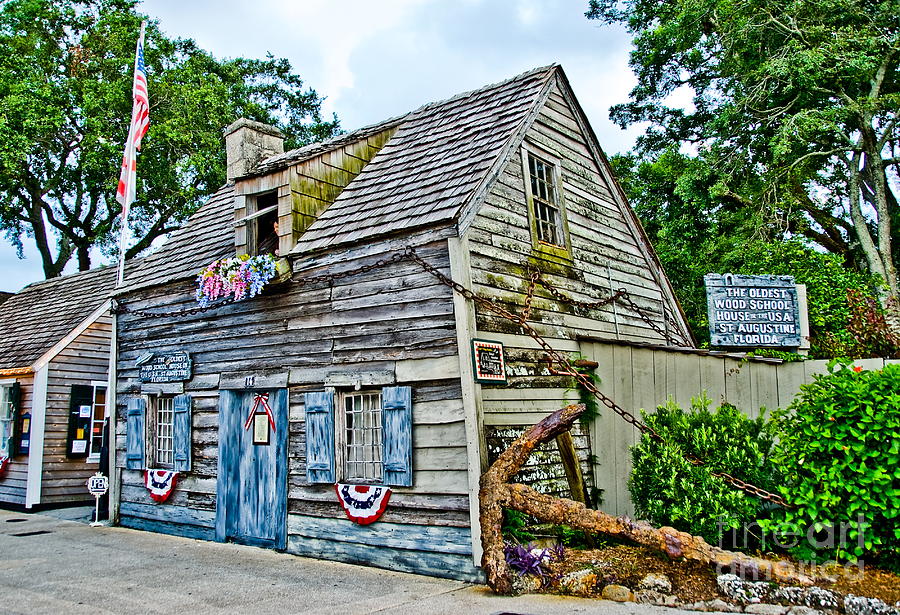
In the heart of St. Augustine, Florida, lies the Oldest Wooden Schoolhouse, a rare relic from colonial America that reflects the early settlers’ commitment to education. Located on St. George Street, this unassuming structure dates back to the early 1700s, making it one of the oldest preserved school buildings in the United States. Its rich history highlights the significance of education in colonial society and the perseverance of the people who lived in this frontier town.
Early Education in St. Augustine The Historic Significance of the Oldest Wooden Schoolhouse
Built between 1702 and 1716, during St. Augustine’s Spanish colonial period, the Oldest Wooden Schoolhouse served both as a classroom and home for the town’s first schoolmaster, Juan Genoply, a Greek immigrant. The building was constructed from locally sourced red cedar and cypress, chosen for their durability against Florida’s often harsh climate. The schoolhouse’s small, one-room design reflects the modest yet practical approach to education in early America.
 As the first formal school in the settlement, the schoolhouse played a vital role in the lives of local children. In colonial St. Augustine, education was a luxury, and few had the opportunity for formal schooling. Here, children of various ages gathered to learn basic reading, writing, arithmetic, and religious instruction. Books were scarce, so much of the learning was done through memorization and recitation. This simple approach helped build the foundation for future generations in the fledgling American colonies.
Life inside the Oldest Wooden Schoolhouse was far different from the classrooms we know today. The single room accommodated students of different ages and abilities, all of whom sat on wooden benches and used slates for writing. The schoolmaster instructed the children, often teaching with limited resources. Outside of schooling hours, children were expected to assist their families with daily chores, which made the school day long and challenging.
The schoolmaster’s family lived in the same building, using the second floor as their living quarters. This dual-purpose use of the structure reflects how tightly woven community and education were in colonial St. Augustine. The schoolhouse was not just a place of learning; it was also a home and a central part of the community’s social fabric.
The Oldest Wooden Schoolhouse A Testament to Resilience and Preservation in St. Augustine
The Oldest Wooden Schoolhouse has stood the test of time, surviving centuries of Florida’s coastal weather, including hurricanes and fires. Preservation efforts began in the late 19th century when its historical importance was recognized. An iron chain was famously added around the building, a symbol of protection against storms, although this may be more legend than fact. Still, the building’s endurance serves as a reminder of the resilience of early settlers.
By the early 1900s, with the rise of more formal public schools, the Oldest Wooden Schoolhouse ceased to function as an educational institution. It soon became a museum, allowing visitors to experience what colonial education was like. Today, the schoolhouse features exhibits of period furnishings and mannequins in colonial attire, offering a vivid glimpse into the lives of the students and schoolmasters who once occupied this space.
 Visitors can step inside the classroom, complete with wooden benches, a fireplace for warmth, and the basic tools used by students at the time. The museum offers a rare look into colonial life and the critical role education played, even in remote settlements like St. Augustine.
The Oldest Wooden Schoolhouse is more than just a preserved structure; it is a symbol of the early settlers’ dedication to education. In a time when formal schooling was rare and often inaccessible, this small building stood as a beacon of knowledge. Its legacy speaks to the importance of learning in the development of early American society, shaping future generations despite the challenges of frontier life.
Today, the Oldest Wooden Schoolhouse is a cherished part of St. Augustine’s heritage. It serves as a reminder of the city’s rich history and the enduring value of education. As visitors explore its weathered walls and period exhibits, they are offered a unique connection to the past—a chance to step back into a time when education was a rare privilege and the community’s future was built on the simple, sturdy foundation of a wooden schoolhouse.