Franklin W. Smith story
Franklin W. Smith was a visionary whose legacy continues to influence architecture, society, and historical thought well beyond his time. Born in 1826 in Boston, Massachusetts, Smith became known for his pioneering ideas, successful business ventures, and philanthropic efforts. From a young age, his innovative spirit drove him to challenge conventions in everything he pursued. He made his fortune in the iron trade, but it was his passion for architecture, social reform, and cultural advancement that left an enduring mark. Smith’s life was characterized by bold ideas and groundbreaking contributions that continue to inspire admiration today.
Villa Zorayda A Testament to St. Augustine’s Architectural Heritage
Smith accumulated his wealth early on through a thriving career in the iron trade, which gave him the financial freedom to explore his deep interests in architecture and history. His fascination with Mediterranean architecture, particularly the Moorish and Spanish Revival styles, would eventually shape some of his most renowned creations. One of his most notable achievements is Villa Zorayda in St. Augustine, Florida. Built in 1883, this structure was one of the first in the United States to use poured concrete, a revolutionary technique for its time. The design of Villa Zorayda was inspired by the Alhambra Palace in Spain, and its exotic appearance immediately caught the public’s attention.
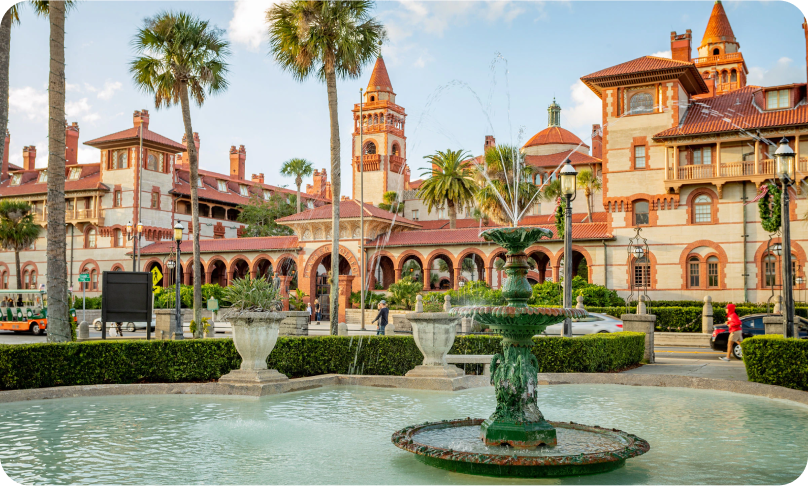
Villa Zorayda not only transformed St. Augustine’s architectural landscape but also sparked an architectural movement in the city. As tourism blossomed, St. Augustine became a hub for visitors intrigued by its blend of historic charm and innovative design. The use of poured concrete in the villa’s construction became a model for future projects in the area. This method was later embraced by Henry Flagler, a key figure in the development of St. Augustine, whose large-scale projects—such as the Ponce de León Hotel—incorporated similar techniques. Smith’s contributions to St. Augustine’s architectural identity are still visible today, solidifying his legacy as a creative trailblazer.
Smith’s Vision A Legacy of Social Reform and Equality in St. Augustine
Smith’s contributions, however, were not limited to architecture. A man of strong moral convictions, he was deeply engaged in social causes. A staunch abolitionist, Smith was a vocal advocate for the abolition of slavery in the United States. His views on equality and justice were ahead of his time, and he worked tirelessly to promote racial harmony and social reforms. Smith believed in the power of education and cultural exchange as tools to bridge social divides. He was a proponent of peace, an advocate for better prison systems, and a believer in the potential for mankind to achieve higher moral and intellectual standards. He even published pamphlets outlining his utopian vision for American society.
His political involvement grew during the Civil War. Though not a soldier, Smith’s commitment to the Union cause was evident. He actively supported the war effort by serving as a commissioner in Washington, D.C., where he helped manage war supplies. Later, he proposed the construction of the National Peace Jubilee Memorial, a grand structure that was intended to symbolize peace and reconciliation following the Civil War. Although the project was never realized, it underscored Smith’s dedication to unity and peace.
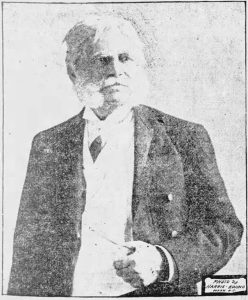 In addition to his advocacy and architectural innovations, Franklin W. Smith was also an author and historian. His deep interest in classical history and world cultures drove him to write extensively on topics ranging from Roman history to international diplomacy. His writings often reflected his idealistic vision for a world where education, culture, and diplomacy could transcend violence and division. His utopian views, though sometimes seen as eccentric, inspired many to think beyond the constraints of the time and imagine a more just and peaceful society.
Despite his many accomplishments, Smith’s life was not without controversy. His idealistic nature and progressive ideas often clashed with the more conservative attitudes of his era, making him a polarizing figure in certain circles. His financial ventures, particularly his ambitious building projects, sometimes strained his resources, leading to financial challenges later in life. However, his unyielding dedication to his beliefs and his pioneering spirit left an enduring legacy.
Franklin W. Smith died in 1911, but his influence is still felt today, particularly in St. Augustine, where his architectural innovations and vision for cultural exchange continue to shape the city’s identity. Villa Zorayda remains a testament to his creativity and boldness, serving as both a historical landmark and a symbol of his forward-thinking approach. His contributions to architecture, social reform, and peace advocacy place him among the most fascinating figures of 19th-century America.
Smith was a man who defied convention, using his wealth and platform to push boundaries and challenge societal norms. His legacy endures not just in the buildings he constructed but in the ideals he championed. Through his life and work, Franklin W. Smith left a lasting imprint on American architecture and social thought, making him a true pioneer of his time.